Loneliness in Midlife: Why It Happens and What It Means


Many adults who seek psychotherapy arrive with a confusing complaint.
Their lives appear successful. They have careers, relationships, and responsibilities that others admire. Yet internally something feels off. They describe a vague sense of emptiness, emotional distance, or a persistent feeling that something essential is missing.
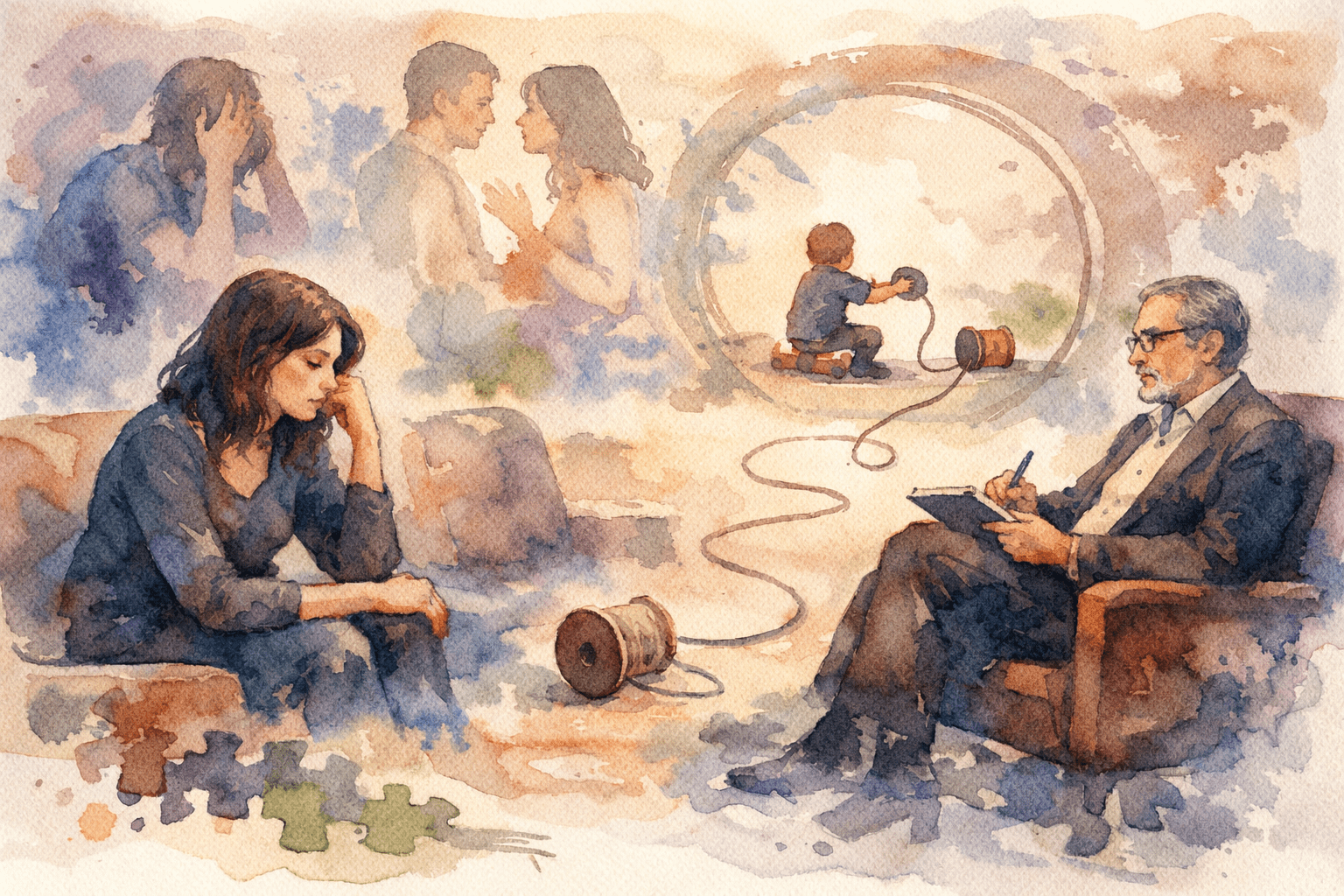
Often the roots of this experience lie in a form of childhood experience that is easy to overlook: growing up with emotionally unavailable parents.
Unlike more visible forms of adversity, emotional neglect is subtle. There may have been food on the table, schools attended, and opportunities provided. From the outside the family looked functional. Yet something essential in the emotional relationship between parent and child never fully developed.
Psychodynamic psychotherapy frequently begins by exploring these early relational patterns and the ways they continue to shape adult life.
Emotionally unavailable parents are not necessarily cruel or intentionally neglectful. In many cases they are people dealing with their own limitations: depression, anxiety, chronic stress, personality structure, or cultural expectations that discouraged emotional expression.
What defines emotional unavailability is not the parent’s intentions but the child’s experience of emotional responsiveness.
Children require several psychological conditions in order to develop a stable sense of self. These include emotional attunement, consistent responsiveness, curiosity about the child’s internal world, and the ability to tolerate the child’s feelings.
When these conditions are missing, the child often learns a quiet but powerful lesson: their emotional life must be managed alone.
Over time this shapes how the individual understands relationships, feelings, and even their own needs.
Unlike overt abuse, emotional neglect is difficult to recognize.
Many adults initially resist the idea that anything was missing in their upbringing. Their parents may have been hardworking, responsible, and materially supportive. Because there was no obvious harm, the absence of emotional connection can be difficult to name.
Psychological research often refers to this experience as perceived parental neglect, meaning the child experienced a lack of emotional responsiveness even when basic care was present. This perception plays an important role in shaping later attachment patterns and relational expectations (Borelli et al., 2015).
In practice, this means many people grow up believing that their emotional difficulties are simply personal flaws rather than understandable responses to early relational environments.
Adults raised in emotionally distant families often describe similar childhood patterns.
Expressions of sadness, anger, or fear may have been dismissed with comments like “you’re too sensitive,” “you’ll be fine,” or “stop making a big deal out of things.”
Over time children learn to suppress emotional expression because it produces no meaningful response.
Some families function efficiently while avoiding emotional dialogue altogether. Practical matters are discussed easily, but topics involving vulnerability, fear, or personal meaning remain largely absent.
Many high-achieving adults describe childhoods where performance mattered more than feelings. Academic success, sports, or professional accomplishments became the primary route to parental approval.
Emotionally unavailable parents may be physically present but psychologically elsewhere. Work stress, mental health struggles, or unresolved trauma can limit their ability to engage emotionally with children.
One paradox often emerges in therapy: many individuals raised in emotionally unavailable households become highly successful adults.
Psychodynamically this pattern is not accidental.
When emotional connection with caregivers is unreliable, children often develop strategies designed to preserve the relationship while protecting themselves from disappointment.
One common strategy is achievement-based identity. Instead of seeking emotional reassurance, the child learns to earn attention through performance. Success becomes a substitute for closeness.
Perfectionism, in this context, is less about ambition and more about maintaining psychological safety. Research on perfectionism in clinical settings frequently observes how high standards and relentless self-evaluation develop as psychological defenses organized around maintaining connection and self-worth (Cheek et al., 2018).
The message becomes simple: if I perform well enough, I will be valued.
Over time this defensive organization can produce impressive careers alongside persistent emotional dissatisfaction.
Adults who grew up with emotionally unavailable parents often report several recurring patterns.
Many describe a vague emotional numbness or confusion about their own reactions. Because feelings were not discussed or mirrored in childhood, emotional awareness never fully developed.
Even in stable partnerships, individuals may experience an underlying sense of emotional separation. They may care deeply about others but struggle to feel truly known.
A strong belief often develops that one must handle everything alone. Asking for help may feel uncomfortable or even shameful.
Achievement becomes intertwined with self-worth. Success provides temporary relief but rarely produces lasting emotional satisfaction.
Attachment theory provides one framework for understanding these patterns.
Early relationships with caregivers create internal templates for how relationships function. These templates influence expectations about closeness, trust, and emotional safety throughout life.
Psychotherapy research shows that attachment patterns also influence how patients and therapists relate to each other. For example, patients with higher attachment anxiety often evoke protective or overinvolved responses from therapists early in treatment (Westerling et al., 2019).
These relational dynamics can become valuable material for therapy. The therapeutic relationship provides a space where longstanding relational expectations can be observed, understood, and gradually revised.
Another concept that appears frequently in psychoanalytic literature is defensive caregiving.
Individuals who lacked reliable care in childhood sometimes adapt by becoming highly responsible for others. They anticipate needs, provide support, and maintain stability within relationships.
While this can appear generous and capable on the surface, it may also function as a defense against unmet dependency needs earlier in life (McCluskey & Gunn, 2015).
In therapy, many people recognize that they are excellent at caring for others but struggle to accept care themselves.
Many adults do not recognize the impact of emotional neglect until their thirties or forties. Several factors contribute to this delayed recognition.
Achievement can temporarily compensate for emotional deficits. Career advancement, academic success, or professional recognition provide structure and validation.
As adult relationships deepen, emotional expectations increase. Difficulties with vulnerability or emotional intimacy become more noticeable.
Major transitions—parenthood, career shifts, loss, or burnout—often trigger questions about identity and emotional meaning that were previously avoided. These moments frequently lead individuals to psychotherapy.
Psychodynamic therapy focuses on understanding how early relational experiences shape current emotional life.
Rather than simply managing symptoms, the goal is to examine the deeper psychological structures that developed in response to early environments.
Treatment often involves exploring early relationships, identifying unconscious relational patterns, understanding psychological defenses that developed in childhood, and observing how these patterns appear in present relationships.
The therapeutic relationship itself becomes an important source of information about these dynamics.
Through this process patients gradually develop greater reflective functioning—the ability to understand their own mental states and those of others—which plays an important role in reorganizing attachment patterns and emotional regulation (Borelli et al., 2015).
Individuals interested in learning more about this approach can read about psychodynamic therapy at Bay Psychology Group and how individual psychotherapy works in practice.
One of the surprising experiences in psychodynamic psychotherapy is that insight alone can be deeply relieving.
Many patients spend years assuming that their emotional difficulties represent personal inadequacy. Understanding that these patterns developed as adaptive responses to early relational environments often produces a different perspective.
What once looked like weakness becomes understandable. Achievement, self-reliance, and emotional distance often served important psychological functions earlier in life. Therapy allows these strategies to be examined rather than automatically repeated.
The goal of psychotherapy is not to assign blame to parents or rewrite history. Most emotionally unavailable parents were themselves shaped by environments that limited emotional expression.
Instead, therapy focuses on expanding psychological freedom.
As individuals develop greater emotional awareness, several changes often occur: increased comfort expressing feelings, greater tolerance for vulnerability, more balanced relationships, and reduced reliance on perfectionism or overwork.
These shifts tend to emerge gradually as longstanding relational expectations are reconsidered.
At Bay Psychology Group, psychotherapy is grounded in a contemporary psychodynamic approach. Treatment focuses on understanding the complexity of each individual’s emotional history and relational patterns.
Many patients we work with are thoughtful, accomplished individuals who want to understand themselves more deeply rather than simply manage symptoms.
Psychodynamic psychotherapy provides a structured space to explore these questions and develop a more integrated emotional life. If you are considering therapy in Oakland or the broader Bay Area, learning more about psychotherapy services at Bay Psychology Group may be a helpful place to start.
We help people navigating anxiety, identity concerns, relationship strain, and emotional burnout—especially those who often carry a lot without letting it show. If you’re looking for something deeper than surface-level fixes, psychodynamic therapy might be right for you.

Dr. Brian Sedgeley, is a clinical psychologist and the president and founder of Bay Psychology Group, Inc. a psychotherapy and psychological services clinic in Oakland CA.